Overview
Store food to reduce contamination and keep perishable items at safe temperatures.
Objective
Complete the task safely and confidently by preparing first, following the steps in order and checking the result when finished.
What You Need
- Clean food containers
- Refrigerator or freezer
- Labels if needed
Before You Start
Gather everything you need and make sure the work area is suitable. Read product, appliance or manufacturer instructions where they apply, and do not continue if the task is outside your experience or cannot be done safely.
How to Do It
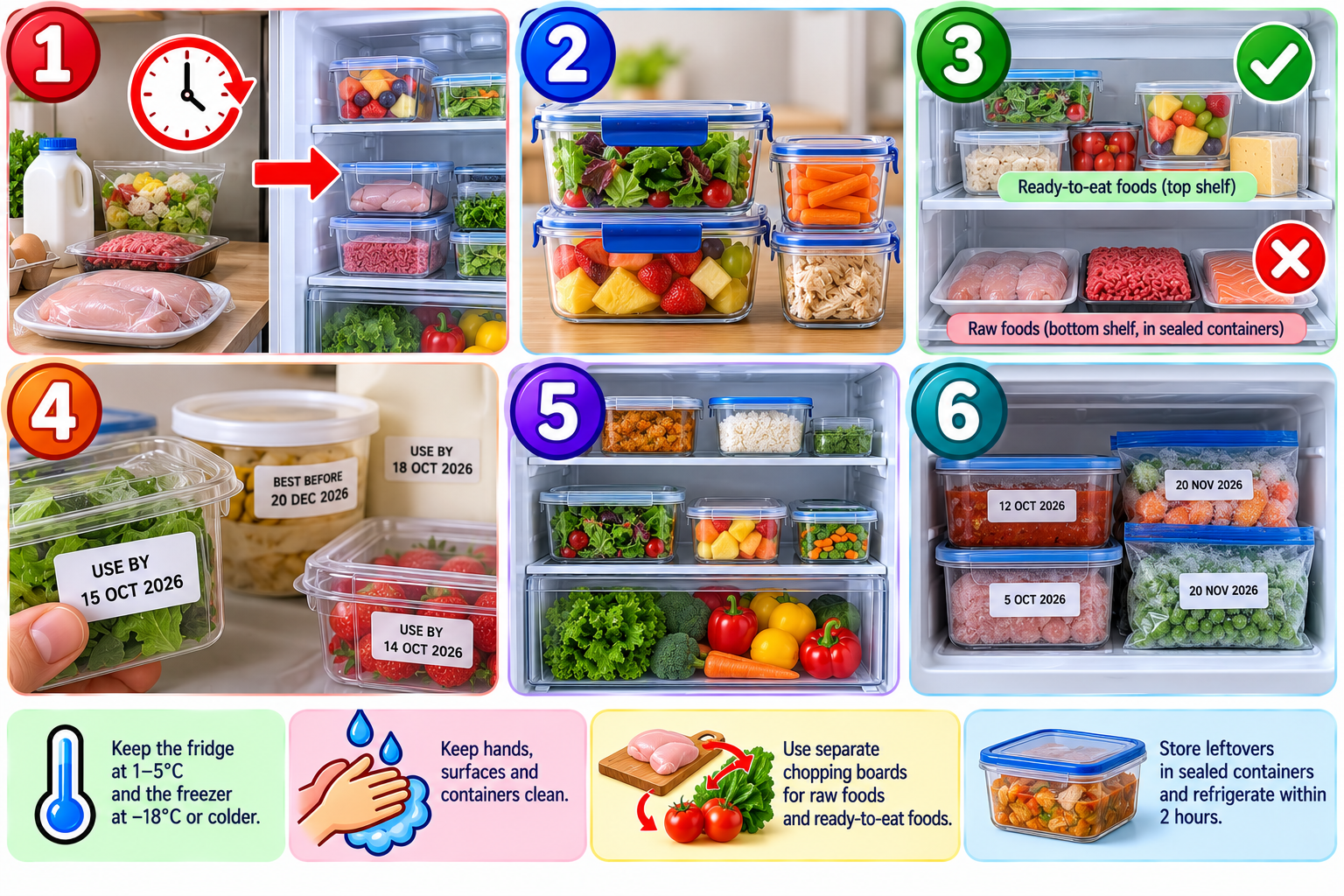
- Refrigerate or freeze perishable food promptly.
- Use clean, covered containers.
- Keep raw meat and seafood separated from ready-to-eat foods.
- Store raw foods where leaks cannot drip onto other food.
- Label leftovers when useful and use them within appropriate storage times.
- Discard food that shows spoilage or has been stored unsafely.
Check Your Work
When finished, check that the result is secure, clean and working as expected. Put tools and materials away safely and clean the work area.
Useful Tips
Follow local food-safety guidance for refrigerator temperatures and storage times.
Common Mistakes
- Starting before gathering the correct tools or materials.
- Rushing steps that need careful positioning, measuring or checking.
- Ignoring product instructions, care labels or manufacturer guidance.
- Continuing when the task becomes unsafe or requires specialist knowledge.
Important Notes
Use this guide as a general everyday overview. Follow applicable manufacturer instructions, local requirements and professional advice for the specific equipment or situation you are dealing with.
FAQ
What if my equipment or situation looks different?
Stop and check the relevant instructions before continuing. Designs and procedures can vary.
When should I get professional help?
Get qualified help whenever the task involves a hazard, damage, specialist equipment or work you are not confident can be completed safely.