Overview
Simple interest is calculated only on the original principal, not on previously earned or charged interest.
Objective
Calculate the interest and final balance using principal, interest rate and time.
What You Need
- Principal amount
- Annual interest rate
- Time period
- Calculator
Before You Start
Convert the annual percentage rate to a decimal and express the time in years unless the formula specifies another period.
How to Calculate
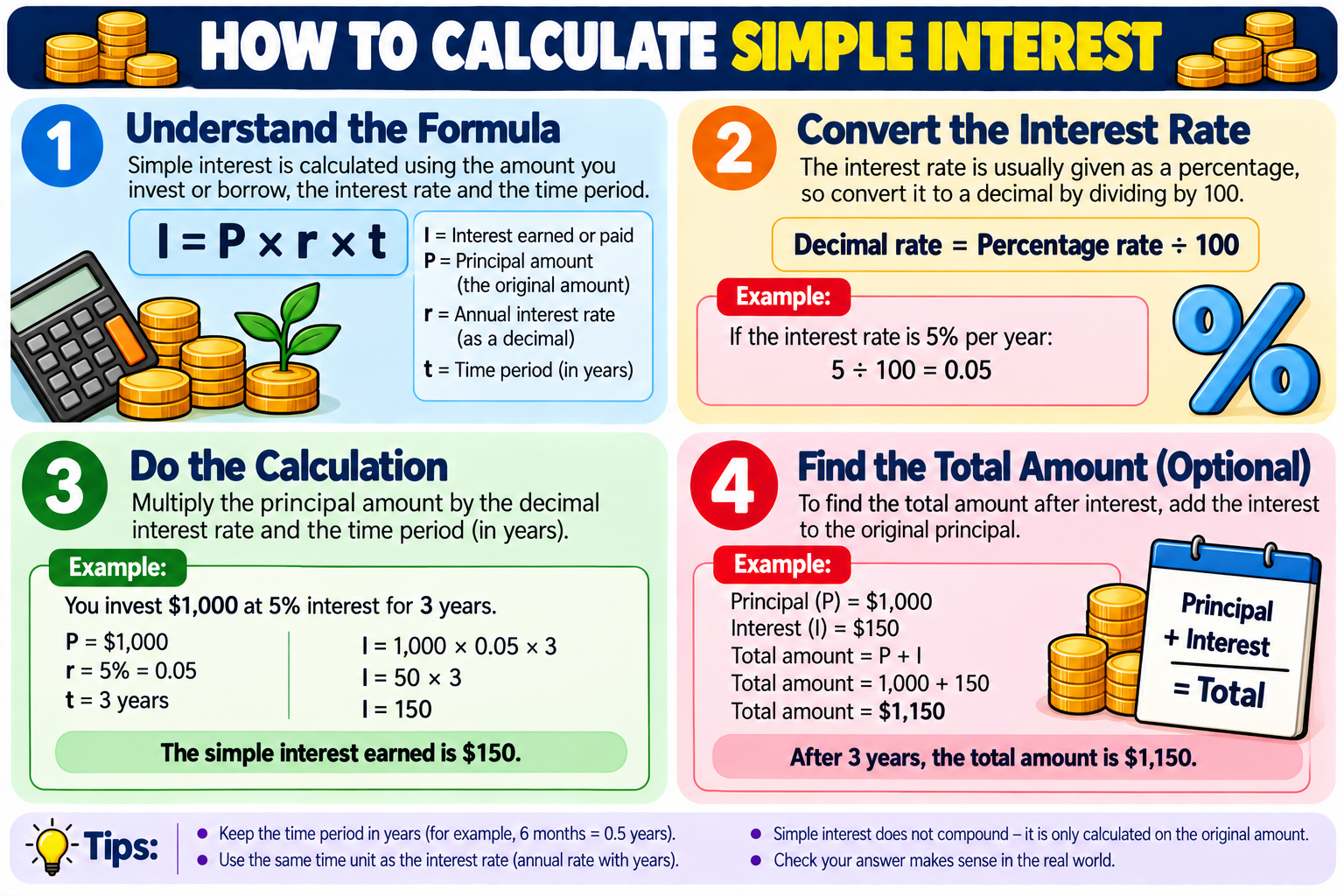
- Use I = P × r × t.
- P is principal, r is the annual rate as a decimal, and t is time in years.
- Add the interest to the principal if you need the final balance.
Worked Example
For $1,000 at 5% simple interest for 3 years: I = 1000 × 0.05 × 3 = $150. Final balance = $1,150.
Useful Tips
- Convert 5% to 0.05 before multiplying.
- Match the time unit to the interest-rate period.
- Keep interest and final balance as separate figures.
Common Mistakes
- Using 5 instead of 0.05.
- Compounding the interest by mistake.
- Using months as years without conversion.
Important Notes
Some loans or investments calculate simple interest over days or months. Use the exact convention stated by the lender or product.
FAQ
Does simple interest earn interest on interest?
No. That is compound interest.
How do I use months?
Convert months to years, such as 6 months = 0.5 years, when using an annual rate.